
When it comes to storage in the food service industry, safety is just as important as organization. Every surface that comes into contact with food containers, ingredients, or equipment plays a critical role in preventing contamination and supporting sanitation.
And it's not limited to commercial kitchens. Other sensitive environments, such as healthcare facilities and labs, equally rely on storage that maintains sanitary conditions. That's why NSF-certified shelving is important. NSF certification assures users that their shelving meets strict standards to ensure performance, compliance, and productivity.
This guide breaks down what you need to know about NSF shelving, helping you make informed decisions tailored to your specific operational needs.
What is NSF?
NSF International, originally the National Sanitation Foundation, is an independent, accredited organization that develops public health and safety standards for products that come into contact with food, water, and other sensitive materials.
NSF standards and certification are the benchmarks by which all commercial foodservice equipment (including shelving) is measured. NSF food equipment standards ensure that shelving meets specific requirements for materials, design, and construction that support these safety goals.
When you see the NSF mark, it means the product has undergone rigorous testing and meets specific standards for safety, quality, and performance. To maintain NSF certification (sometimes referred to as NSF listing), products must undergo regular re-evaluation and facility inspections.
NSF Certified Shelving
Commercial shelving used in foodservice environments is certified under the NSF/ANSI 2: Food Equipment Standard, which sets specific requirements to support food safety and sanitation.
To meet this standard, shelving must handle the rigorous demands of daily foodservice operations, including the following:
- Safe, approved materials
- Hygienic design and construction
- Reliable performance under food service conditions
It's important to note that NSF shelving comes in two types: NSF-certified for all environments or NSF-certified for dry environments only. Knowing the distinction is important, especially if you are looking for NSF-certified shelving for a walk-in cooler or freezer.
What is the NSF/ANSI 2: Food Equipment Standard?
NSF/ANSI 2 is one of the longest-active and most widely used standards in the foodservice industry. It's recognized by health departments across the U.S. and closely aligned with the FDA Food Code and U.S. Public Health Service guidelines.
To earn NSF/ANSI 2 certification, shelving must meet strict criteria:
- Materials: All components must be non-toxic, corrosion-resistant, and smooth enough to clean easily. Generally, shelving must be constructed of materials deemed appropriate for use in food zones as an indirect contact surface
- Design and Construction: Shelving must allow thorough cleaning. It cannot have crevices where bacteria or pests can hide, and it must be accessible for regular sanitation.
- Performance: Shelving must hold up to regular use under typical food service conditions. This includes but isn't limited to cleaning chemicals, temperature shifts, and storing heavy loads without degradation.
By meeting these standards, NSF-certified shelving helps ensure that food storage areas maintain proper sanitation standards and promote food safety.
Learn more about how to maintain proper food storage procedures in the foodservice industry.
The NSF Certification Process for Shelving
NSF certification involves a detailed, multi-step process to ensure shelving meets strict safety, sanitation, and performance standards. Understanding how certification works helps explain why NSF-certified shelving is trusted across foodservice, healthcare, and lab environments.
1. Application and Material Review
Manufacturers submit detailed product specifications, including materials, construction methods, and intended uses. NSF reviews all materials to ensure they're non-toxic, corrosion-resistant, and suitable for food environments. For metal shelving, this includes verifying that a powder coating’s chemistry is appropriate or that any stainless steel used is part of the SAE 200, 300, or 400 series, which are known for their durability and cleanability.
2. Design and Performance Testing
NSF evaluates whether shelving designs allow for easy cleaning and eliminate areas where bacteria can harbor. Laboratory testing verifies performance under real-world conditions. This includes corrosion resistance testing for shelving seeking certification for all environments.
3. Manufacturing Facility Inspection
To confirm product consistency, NSF conducts unannounced audits of production facilities. These inspections ensure that shelving is being produced using approved materials and that manufacturing processes align with submitted specifications and good manufacturing practices (GMP).
4. Ongoing Compliance
NSF certification isn't permanent. To maintain certified status, manufacturers must undergo annual facility inspections and periodic retesting of their products. This ongoing oversight ensures that certified shelving continues to meet NSF standards over time and not just at the point of initial approval.
This level of scrutiny regarding product testing and compliance is why NSF-certified shelving is a gold standard for facility managers, food safety professionals, and health inspectors alike.
NSF Shelving Categories: All Environments vs. Dry Environments
Not all NSF-certified shelving is created equal, and not all shelving is approved for the same conditions. NSF listings indicate whether shelving is approved for all environments or limited to dry storage and heated environments only.
Understanding the differences is essential when choosing the right shelving for your needs, especially when moisture, temperature changes, and cleaning regimens come into play.
NSF Shelving for All Environments
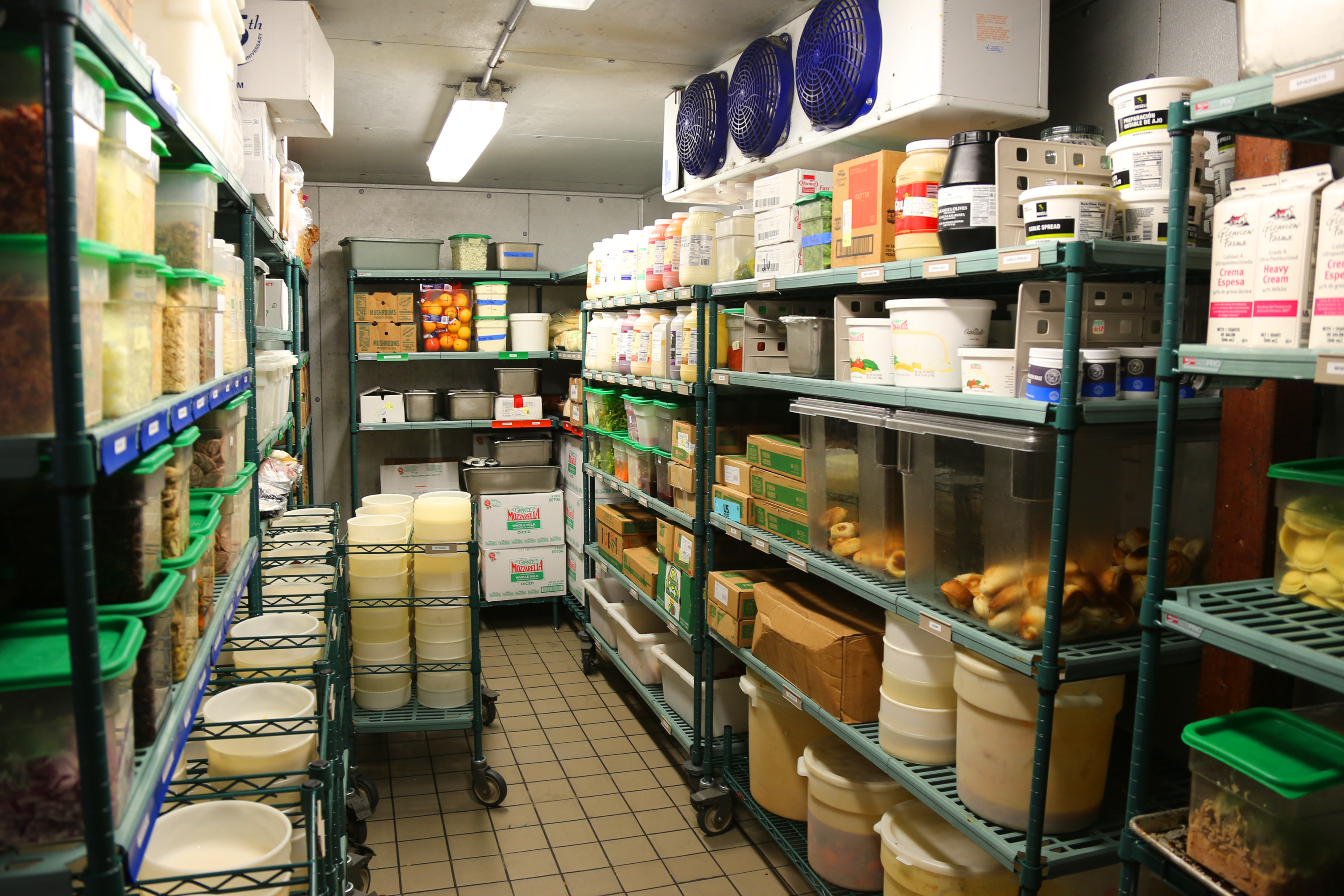
Shelving certified for all environments (including refrigerators, freezers, and ware washing areas) has met additional testing requirements, particularly for corrosion resistance. Shelving with this certification is suitable for wet or humid areas.
Shelving that has been NSF-certified for all environments meets the following criteria:
- Can withstand frequent exposure to moisture, high humidity, and cleaning chemicals.
- Is constructed of corrosion-resistant materials, such as high-grade stainless steel (304 or 316), heavy-duty polymers, or certain protective coatings.
- Pass rigorous corrosion resistance testing to ensure durability in wet conditions.
- Maintain hygienic integrity even under demanding conditions, such as in walk-in coolers, dishwashing areas, and other high-moisture environments.
- Can store food prep equipment that may be damp when put away.
Heavy-duty plastic shelving, such as MetroMax, is commonly used in these applications, but it's not the only option. Metal shelving can also be NSF-certified for all environments when the materials and construction are appropriate.
Stainless steel and epoxy-coated wire shelving systems—such as those with advanced antimicrobial or moisture-resistant coatings like Metroseal—can also meet NSF standards for all environments when designed and tested accordingly.
Pro Tip: If you're outfitting a walk-in cooler or freezer, always verify the NSF listing to ensure it's approved for all environments, not just dry or heated ones.
Learn more about how to choose the right shelving for your walk-in cooler or freezer.

NSF Shelving for Dry Environments
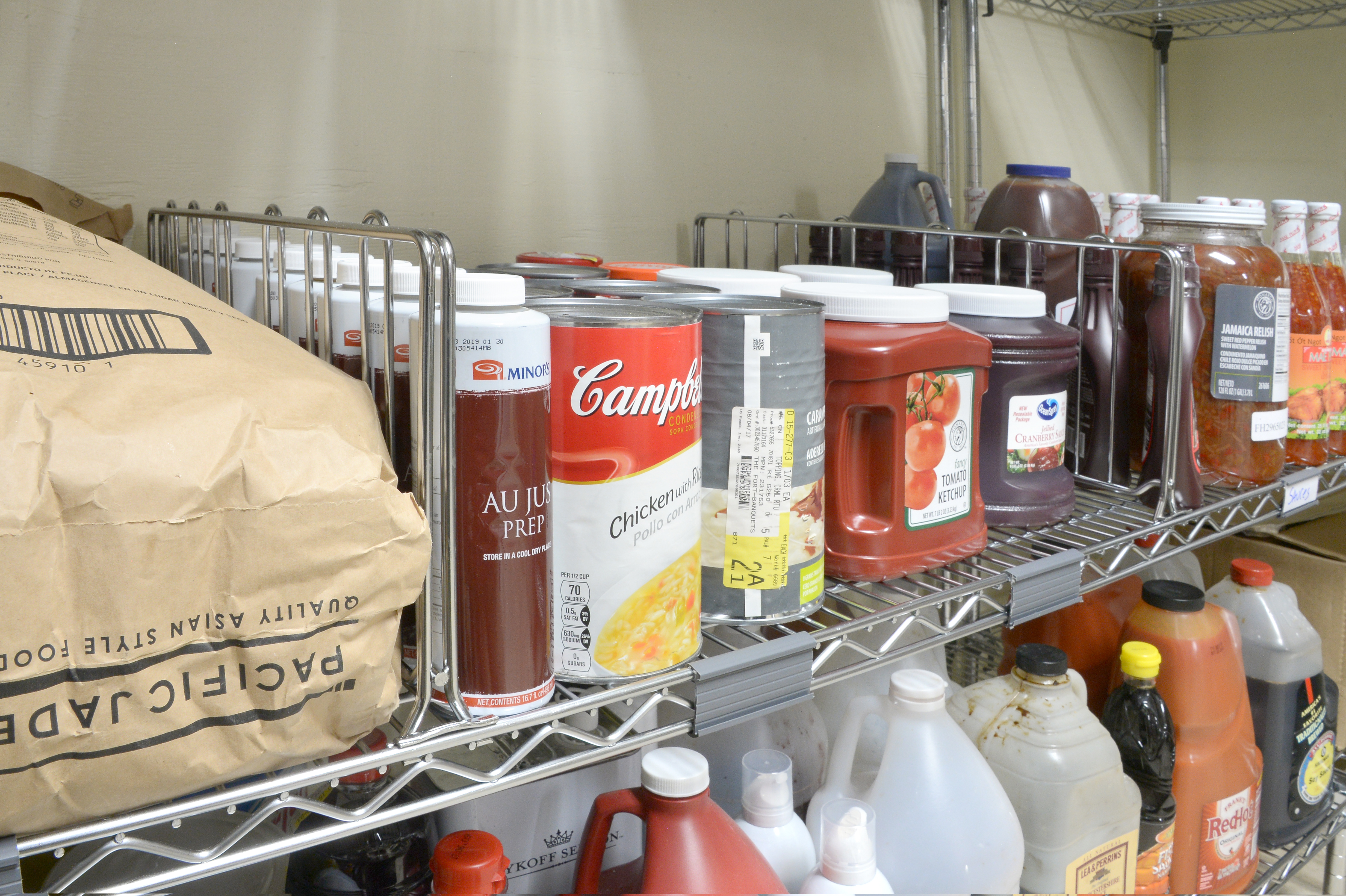
Shelving that has been NSF-certified for dry environments is intended for use in low-humidity areas with minimal moisture exposure.
Here are key areas where this shelving is commonly used:
- Pantries and storerooms
- Dry goods storage
- Retail product displays
- General supply rooms
Here are some of the characteristics of NSF shelving approved for dry environments:
- May be made from materials that haven't been tested for corrosion resistance
- Suitable for pantries, storerooms, and other dry storage areas
- Not intended for use in dishwashing areas, near sinks, or in refrigerated spaces
- Prolonged exposure to moisture can lead to rust, deterioration, or sanitation concerns
Using dry-only shelving in wet conditions may violate health codes and lead to faster wear or contamination risks. It's essential to match the shelving certification to the specific environment where it will be installed.
Pro Tip: Just because shelving is NSF-certified, it doesn't mean it should be placed in a walk-in. Shelving that is NSF-certified for dry environments will rust if used in a cooler environment. If you're experiencing rusty cooler shelving, your shelving may not be suitable for all environments.
NSF Shelving Applications by Industry
NSF-certified shelving is important for restaurants and commercial kitchens. However, those aren't the only industries that benefit.
Here's a look at some of the most common applications for NSF-certified shelving, ranging from foodservice and healthcare to labs and manufacturing facilities.
Foodservice
The food service sector is the most common application for NSF-certified shelving, where both all-environment and dry-environment certifications are widely used:
- Commercial Kitchens: Restaurants, hotels, and institutional kitchens need all-environment shelving in dish rooms, walk-in coolers, and prep areas. Dry-area shelving works well in pantries and dry goods storage.
- Food Processing Facilities: Shelving must withstand frequent washdowns and maintain sanitary conditions throughout production.
- Catering: Mobile and temporary food service operations rely on NSF shelving to meet health codes, regardless of location.
- Grocery and Retail: Deli counters, bakery departments, and food storage areas require NSF shelving to maintain safety standards in front-of-house and back-of-house areas.
Healthcare
Healthcare facilities have strict cleanliness standards that make NSF-certified shelving essential in various medical settings.
- Hospitals: Central supply departments, surgical prep areas, and patient nutrition services require shelving that supports infection control protocols and can withstand medical-grade disinfectants.
- Pharmacies: Both retail and hospital pharmacies use NSF shelving to keep medication storage areas organized and contamination-free
- Long-Term Care: Nursing homes and assisted living facilities use NSF shelving in kitchens and medical storage areas.
Laboratories and Cleanrooms
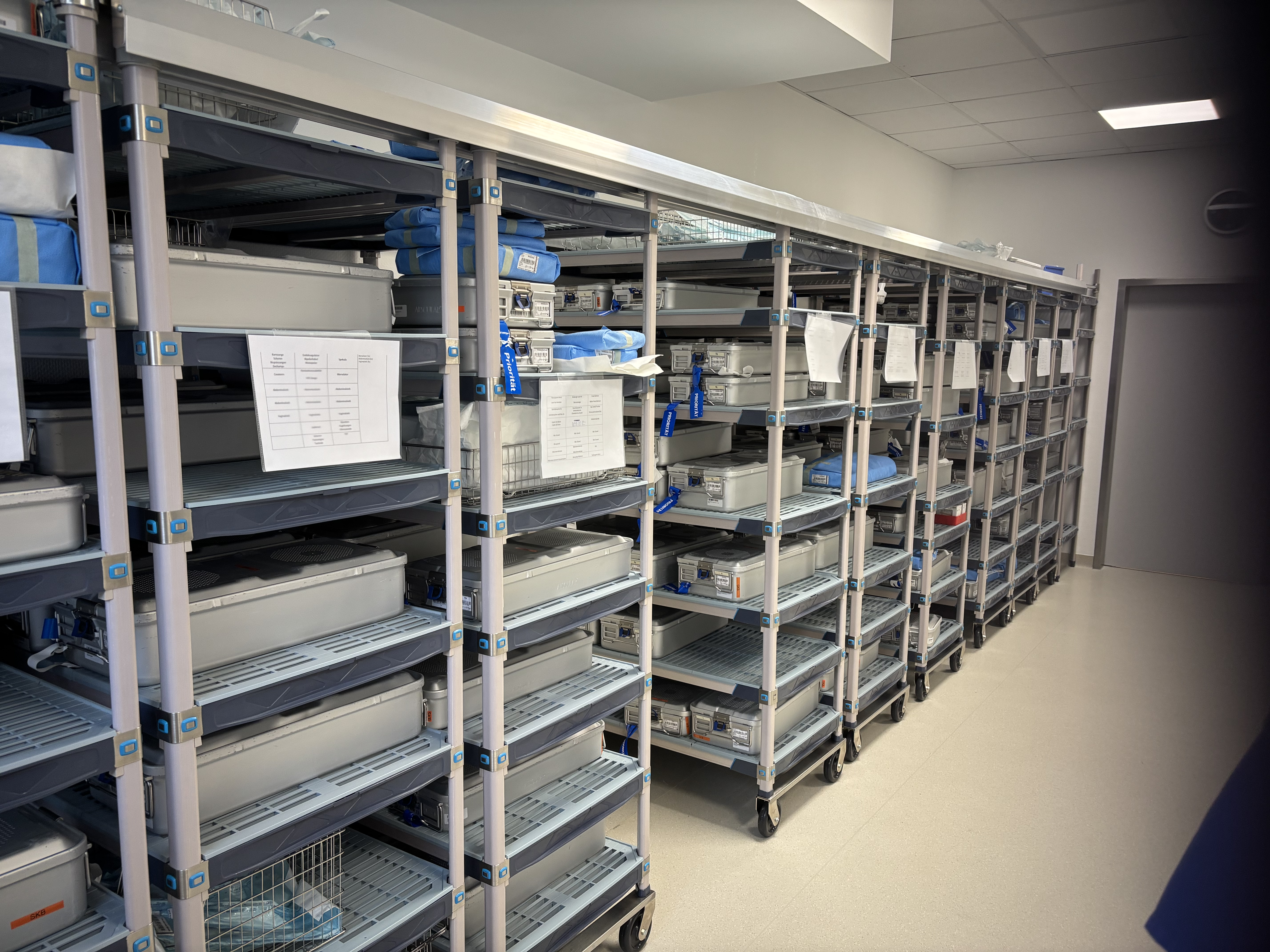
Research and testing facilities require shelving that supports sterility and prevents cross-contamination.
- Research Labs: Sample storage, chemical handling, and equipment staging areas must meet strict contamination control standards.
- Clinical Laboratories: NSF shelving supports clean workflows when handling patient samples and sensitive materials.
- Pharmaceutical Labs: Shelving must meet both NSF standards and FDA pharmaceutical manufacturing requirements.
- Cleanrooms: Controlled environments require specialized shelving that doesn't shed particles or harbor contaminants that could compromise product quality.
Metro NSF-Certified Shelving
Understanding NSF certification requirements is only the first step. The next step is selecting the right shelving system that meets your specific operational needs.
Metro offers NSF-certified shelving solutions designed for a range of applications, including both all-environment and dry-environment applications. These systems are approved for use in food zones and for storing sensitive materials used in healthcare facilities, laboratories, and beyond.
Whether you're specifying shelving for a new facility, evaluating replacements for aging equipment, or ensuring compliance with updated regulations, the goal is the same: choose solutions that align with your environment, cleaning protocols, and compliance needs.
You can learn more about all types of shelving with our commercial shelving buying guide.
NSF-Certified Shelving: Frequently Asked Questions
What is NSF-certified shelving?
NSF-certified shelving has been tested and approved by NSF International to meet strict public health and safety standards. Most used in foodservice, healthcare, and laboratory environments, NSF shelving is designed to be easy to clean, corrosion-resistant, and safe for food zone or sensitive material storage. Certification ensures the shelving meets the NSF/ANSI 2 Food Equipment Standard for materials, design, and performance.
How do I know if shelving is NSF certified?
You can identify NSF-certified shelving by looking for the official NSF mark on the product or its packaging. Most certified shelving will also include NSF details in product descriptions or spec sheets. For complete verification, you can search the NSF International website to confirm it meets the applicable standard.
Can you use dry environment NSF shelving in walk-ins?
No. NSF shelving certified for dry environments is not approved for wet or humid areas like walk-in coolers or dishwashing stations. They have not passed corrosion resistance testing and may degrade over time when exposed to moisture. For walk-ins or other high-moisture environments, choose shelving that is NSF certified for all environments.
What materials are required for NSF certification?
To be NSF certified, shelving must be made from materials that are smooth, non-toxic, corrosion-resistant, and easy to clean. Approved materials include stainless steel (typically SAE 200, 300, or 400 series), certain plastics and rubbers, and some coated metals. If painted or coated, the finish surfaces must pass durability, corrosion tests, and abrasion tests to ensure they hold up under normal use and cleaning.
Does chrome shelving qualify for NSF certification?
Yes, chrome shelving can be NSF certified, but only for dry environments. Chrome is not corrosion-resistant enough for use in wet or humid conditions, making it unsuitable for areas such as dish rooms, walk-ins, or similar environments. If you need shelving for these environments, consider plastic shelving, such as MetroMax, or, for wire shelving, Metroseal or stainless steel. These options are NSF-certified for use in all environments.