
Labs are demanding environments for furniture and equipment.
Surfaces are often exposed to chemicals, undergo frequent sanitation, and are subject to the weight of equipment, all of which place demands on performance and durability. Furniture and transport equipment in labs must also promote safe and hygienic working conditions in accordance with standards from organizations such as OSHA, ISO, and SEFA.
Lab tables, shelving, and carts can experience everything from daily cleaning with alcohol or quaternary disinfectants to periodic use of bleach or hydrogen peroxide, and possibly full cart washing or sterilization cycles. Because of these harsh conditions, material selection is critical when specifying lab furniture.
Stainless steel is a popular choice for laboratory furniture and casework because it can meet the specific demands of such environments. But not all stainless steel is the same, so it’s equally important to understand how different grades—such as 304 and 316—can influence long-term performance in specific applications.
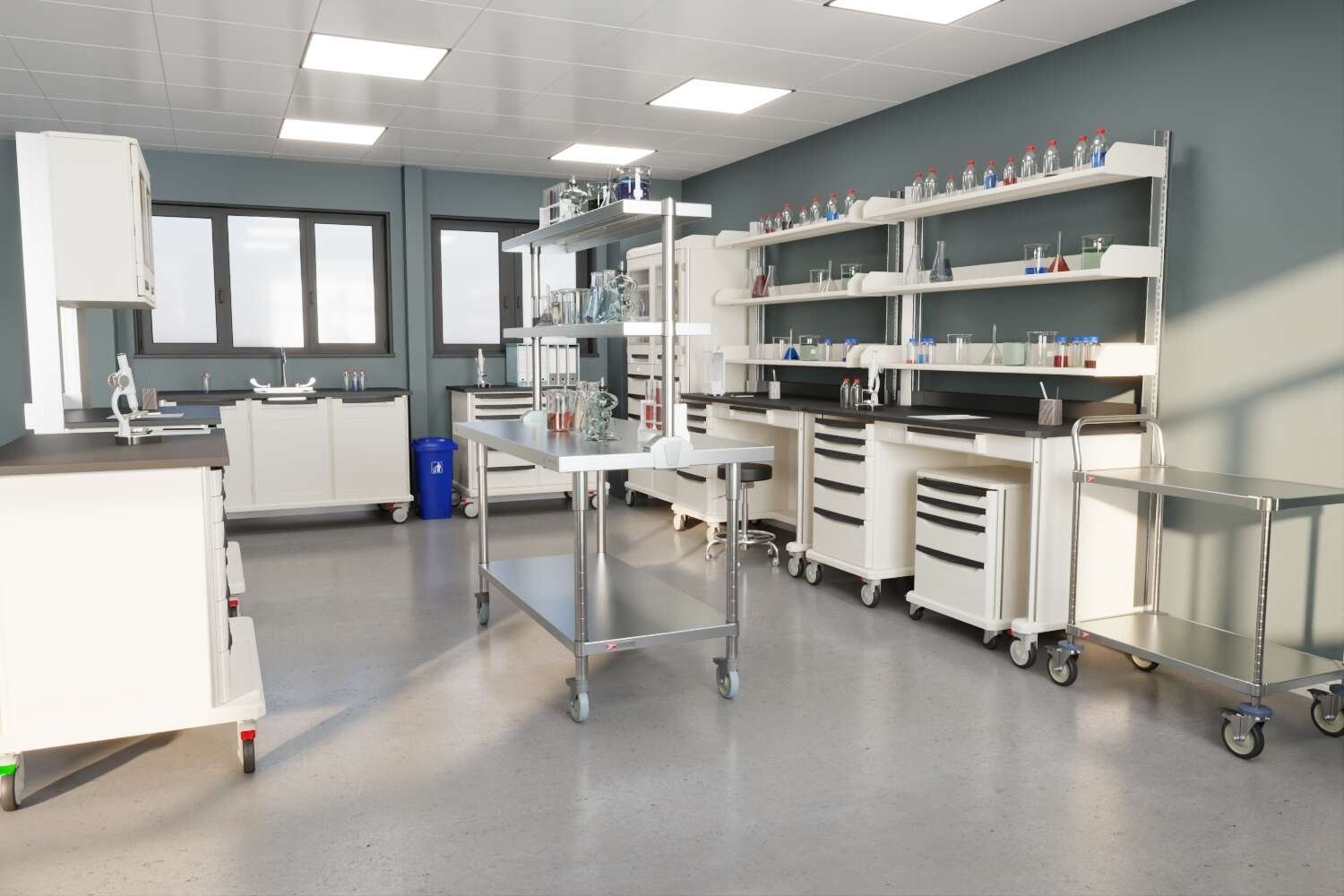
Why Stainless Steel Is Commonly Used in Labs
Stainless steel is a broad term for a family of corrosion-resistant steel alloys that contain chromium. It may also contain other elements such as molybdenum, nickel, manganese, and nitrogen, which give the alloy specific properties that benefit different applications.
What is Stainless Steel?
Stainless steel starts with conventional steel, which is primarily composed of iron and carbon. While steel is a very strong and durable metal alloy, it can still oxidize under certain conditions. Adding chromium (to create stainless steel) significantly improves its corrosion resistance; it creates a thin, invisible, passivated layer of chromic oxide that helps protect the underlying alloy from degradation and improves its performance at higher temperatures.
Because of this natural corrosion resistance, stainless steel performs exceptionally well in environments where surfaces are frequently exposed to moisture and aggressive substances. It also provides a smooth, non-porous surface that is easy to clean and helps reduce the risk of contamination.
The Beneficial Properties of Stainless Steel for Labs
Stainless steel is known for its exceptional properties, making it the preferred—and often required—work surface across industries such as laboratories, pharmaceutical facilities, and cleanrooms.
While the specific properties will vary across different types of stainless steel, in general, they all share these common characteristics:
- Chemical/Corrosion Resistance: The chromium content protects stainless steel products from rust and corrosion. Stainless steel can resist harsh, corrosive substances better than many other materials (e.g., resistance to alcohols, hydrogen peroxide, and properly rinsed chlorine-based cleaners).
- Heat Resistance: Stainless steel maintains its strength and resists scaling at high temperatures, above conventional steel (different grades resist heat to varying degrees).
- Strength and Durability: Stainless steel is tough and resistant to dents and scratches. It provides excellent mechanical properties, making it suitable for heavy-duty applications and many manufacturing processes.
- Aesthetic Appeal: Stainless steel has a sleek appearance, which is both functional and aesthetically pleasing in modern labs.
- Hygiene and Sanitation: In addition to looking clean, stainless steel has a smooth, non-porous surface that is easy to sanitize and maintain. The material does not retain moisture or support bacterial growth.
All of these properties make stainless products popular for use in laboratory environments, including tables, workbenches, shelving, carts, and casework.
The Most Common Types of Stainless Steel Used in Lab Furniture
Stainless steel is not a single material. As mentioned earlier, it refers to a family of chromium-containing alloys designed to resist corrosion, with more than 60 recognized grades. Each one has slightly different properties depending on the other elements added (such as Molybdenum, Nitrogen, Nickel, Silicon, and Manganese), which give each grade its specific performance characteristics.
These differences, which include corrosion resistance, ductility, strength/hardness, and high-temperature stability, are especially important in a lab setting. Work surfaces, shelving, and carts are exposed to moisture, cleaning agents, temperature changes, and, in many cases, chemical contact. As a result, the exact composition of stainless steel can significantly affect its performance over time.
This means that not every grade of stainless steel is appropriate for use in a lab. Conversely, the right stainless steel grade can help extend the life of lab furniture and help maintain sanitation and contamination control protocols.
So, what is the best stainless steel grade for labs?
Most laboratory tables, shelving systems, carts, etc., are manufactured from 300-series stainless steel, particularly grades 304 and 316. These alloys are widely used because they offer strong corrosion resistance, durability, and easy-to-clean, easy-to-maintain surfaces.
Other types of stainless steel, such as 400 series, are rarely—if ever—used in labs because they offer far less corrosion resistance and won’t hold up under the demands of rigorous cleaning.
304 Stainless Steel
Type 304 stainless steel is the most common grade and is considered the standard for general laboratory use.
It is an austenitic alloy containing roughly 18% chromium and 8% nickel, which is why it is sometimes referred to as 18/8 stainless steel. This composition offers high resistance to rust and corrosion, even when exposed to common laboratory chemicals and wet conditions. 304 is also very strong and durable, so it maintains structural integrity over time.
For this reason, 304 stainless steel is commonly used for core laboratory furniture, including lab tables, workbenches, shelving systems, and carts used for everyday work and equipment storage.
Overall, 304 is well-suited for labs where oxidation, water corrosion, and exposure to many chemicals could be problematic. However, some labs might need a higher-grade stainless steel, especially if the environment includes frequent exposure to chemical processing or high chloride levels, such as bleach solutions that are not consistently rinsed. In those situations, 316 is preferred.
316 Stainless Steel
Like 304, type 316 stainless steel is an austenitic alloy with excellent mechanical properties and corrosion resistance, thanks to high levels of chromium and nickel. What sets this grade alloy apart is its molybdenum content (typically 2-3%).
The molybdenum—which is not present in 304—increases protection against chlorides, salts, and certain industrial chemicals, which can cause pitting or crevice corrosion in other stainless steels. Because of this, 316 stainless steel is better for environments where surfaces are exposed to aggressive cleaning agents or corrosive substances. This includes disinfectants such as sodium hypochlorite (bleach), peracetic acid, vaporized hydrogen peroxide, and other oxidizing or chloride-based agents.
Laboratories operating under strict sanitation protocols—such as pharmaceutical manufacturing, biotechnology research, and cleanroom environments—often specify 316 stainless steel for tables, shelving, and carts that must tolerate more demanding conditions.
Due to its superior performance in chloride-rich environments, 316 stainless steel is often referred to as marine-grade stainless steel.
Can 430 Stainless Steel Be Used in Labs?
430 is another common alloy, although it’s not as popular as 304. It differs from the 300-series stainless steels in both composition and performance. Unlike types 304 and 316, type 430 contains no nickel and has a lower chromium content. It is also a strongly magnetic ferritic stainless steel, unlike non-magnetic austenitic stainless steels.
While its chromium content provides some resistance to moisture and oxidation, especially compared to non-stainless steel metals such as galvanized steel, its overall lower corrosion resistance makes it unsuitable for lab use. It is more susceptible to degradation in harsh conditions, such as frequent wet cleaning, elevated heat, or repeated temperature cycling.
Historically, 430 has primarily been used in foodservice applications, where direct chemical contact is less common; however, even this industry has been moving away from this alloy in favor of 304.
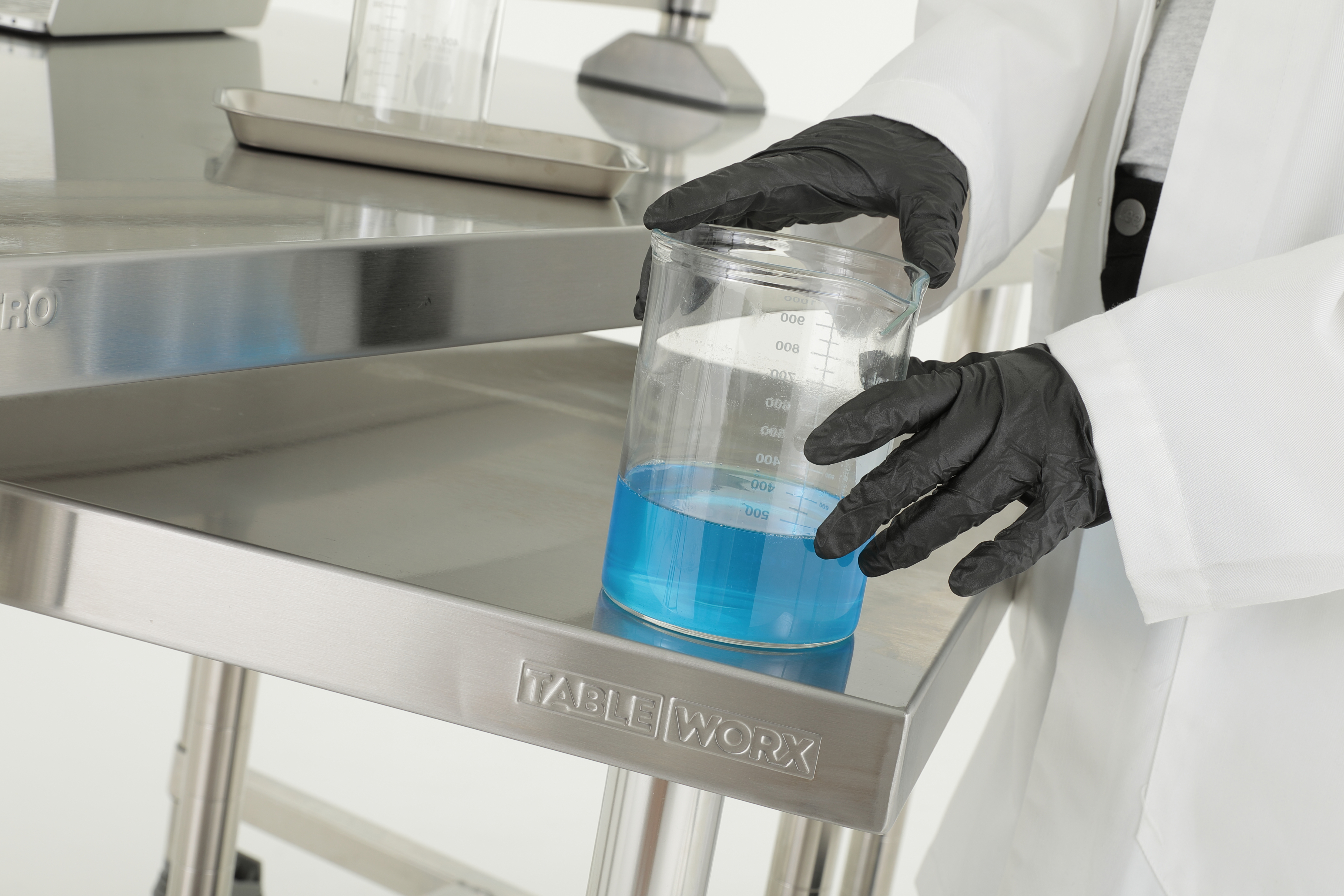
How to Choose the Right Stainless Steel for Lab Furniture
304 and 316 are the best material choices for stainless steel furniture. Whether you need the added corrosion resistance of 316 depends on how the equipment will be used, what it will be exposed to, and how it will be cleaned over time.
When to Choose 304
In many general laboratory environments, 304 stainless steel is ideal, offering high performance at a lower cost than type 316. It is suitable for use in facilities where exposure to harsh chemicals is expected.
Typical use cases for type 304 stainless steel include:
- Research and academic laboratories
- Clinical and diagnostic labs
- Teaching labs and general-purpose workspaces
- Facilities using standard disinfectants such as isopropyl alcohol, ethanol, and diluted hydrogen peroxide used in routine surface sanitation
In these scenarios, 304 stainless steel offers enough corrosion resistance and longterm durability for everyday operations.
When to Choose 316
Some facilities may require even more durable work surfaces and storage solutions than 304-grade stainless steel can provide. 316 is often specified in facilities where frequent exposure to harsh chemicals is common, either due to cleaning protocols or the materials used. This often includes environments where carts, shelving, or work surfaces are routinely washed down or subjected to repeated wet-cleaning cycles.
Typical use cases for type 316 stainless steel include:
- Pharma and biopharma manufacturing facilities
- Cleanrooms and controlled environments
- Compounding pharmacies and sterile processing areas
- Facilities using chloride-based solutions, bleach, or peracetic acid
- Environments with frequent sterilization or caustic cleaning protocols (including products such as Spor-Klenz)
In these applications, 316 stainless steel helps reduce the risk of pitting, corrosion, and long-term surface degradation.
Additional Considerations
For workstations, prep areas, and any surfaces that come into regular contact with chemicals or cleaning agents, 304 or 316 stainless steel is typically specified.
Autoclaving and Cart Washing
While many stainless steel alloys can tolerate autoclave temperatures, not all lab furniture is designed for sterilization or cart washing. In mobile equipment, components such as casters, fasteners, and bearings often determine whether a product can withstand repeated steam, pressure, and thermal cycling. Purpose-built autoclavable carts and shelving are typically engineered with specific materials and construction details to prevent premature corrosion or failure.
Cleaning protocols should be evaluated closely.
Frequent use of disinfectants such as bleach, peracetic acid, or hydrogen peroxide can impact long-term material performance. Environments with more aggressive or frequent cleaning cycles often benefit from higher corrosion resistance.
Consider total cost over time, not just upfront cost.
While lower-cost materials may reduce initial spend, more durable stainless steel grades can help minimize maintenance, replacement, and downtime over the life of the equipment.
Metro Stainless Steel Lab Tables, Shelving, and Carts
 Not all lab furniture is built—or used—the same way. Work surfaces, storage, and mobile equipment face different exposure conditions, which is why configuration matters as much as the materials used.
Metro’s stainless steel lab tables, shelving, and carts are offered in a range of configurations to reflect how these products function in real laboratory environments.
Stainless Steel Lab Tables and Workstations
For lab work tables, the work surface is the most important consideration. It’s the area that comes into direct contact with chemicals, samples, cleaning agents, and daily wear. Other components—such as legs, frames, and undershelves—typically see far less direct exposure.
This means that facilities with cost constraints can still get a preferred 300-series stainless steel work surface at a lower cost.
Metro TableWorx stainless steel tables offer three levels of materials to match performance needs and budgetary constraints:
- Standard 304 stainless work surface tables with epoxy‑coated steel legs are suitable for academic and general lab use that does not require full stainless construction below the work surface.
- All-Stainless 304 work surface tables with type 304 stainless steel legs are suitable for most lab, electronics, pharmaceutical, and general life science applications where the legs and other components need a high level of protection.
- All-Stainless 316 work surface tables with type 304 stainless steel legs are suitable for cleanroom, biopharma, and other applications requiring a marine-grade stainless steel work surface.
Tables can be further configured into workstations using work table accessories such as undershelves, risers, drawers, and overhead storage.
Stainless Steel Shelving for Laboratories
Modern labs typically utilize a combination of open and closed storage in their facilities. Frequently used items such as glassware, tools, and equipment are often stored on shelving units for easy access, while hazardous and sensitive materials are stored in cabinets or casework to meet OSHA and chemical safety requirements.
While shelving may not always have the same level of direct chemical exposure as work surfaces, it is still subject to routine cleaning, disinfectants, and ambient humidity, especially in active spaces, cleanrooms, and washdown areas. As a result, stainless steel is often specified for lab shelving, with type 304 being the industry standard.
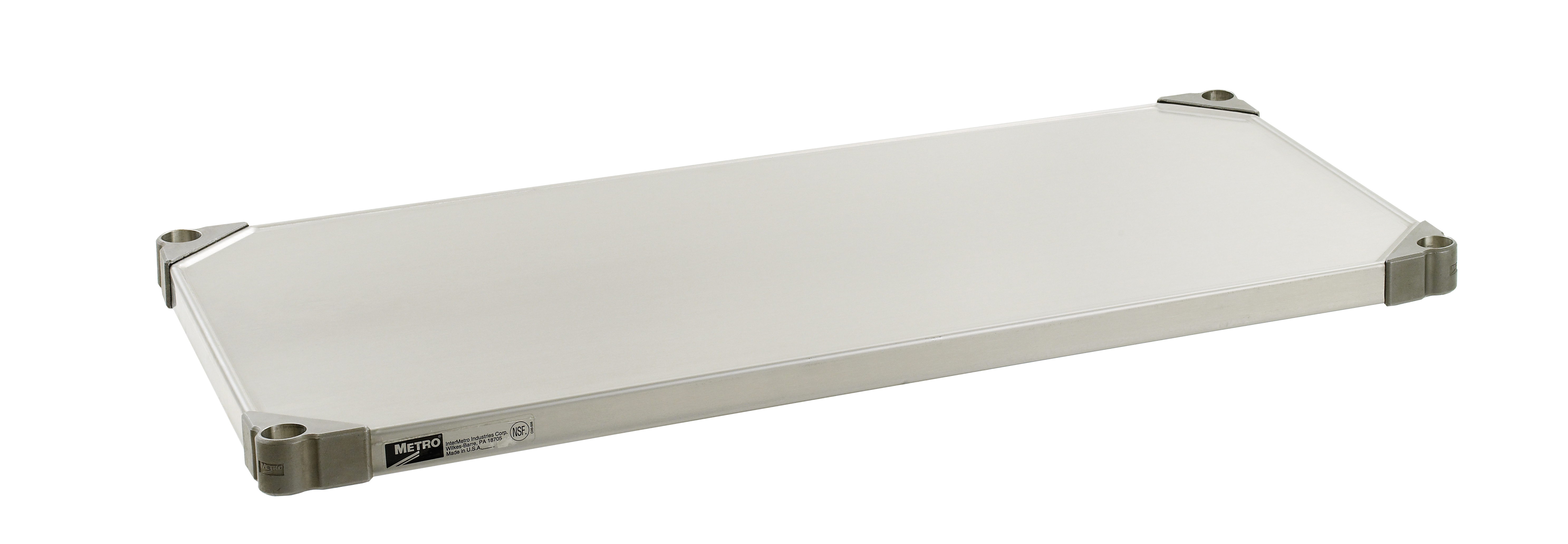
Shelf design also varies depending on how the space is being used. Solid shelves are often preferred in areas where spill containment and wipe‑down cleaning are important, while wire shelves are commonly used when airflow, visibility, and flexibility are more important.
Metro stainless steel shelving systems are available in multiple configurations to align with the diverse needs of labs. In addition to Super Erecta 304 stainless steel wire shelving, Metro also has multiple solid shelving options, including louvered/embossed stainless steel (type 304), standard stainless steel solid shelving (type 304), and autoclavable/cart-washable stainless steel solid shelving available in both type 304 and type 316 stainless steel.
Utilizing the Metro Super Erecta platform, both stainless steel wire and solid shelving can be incorporated into the same units for a custom storage solution. Stationary and mobile stainless steel shelving units are available.
Stainless Steel Lab Carts and Mobile Equipment
Laboratory carts transport materials, samples, and equipment throughout the facility. They’re often used between workstations, at cleanroom entry points, and during staging or sterile processing, so they are exposed to a wider range of conditions compared to stationary furniture.
The choice of stainless steel grade depends on where the cart will be used and the sterilization processes. Carts operating in general lab environments may use 304 stainless steel, while those used in cleanrooms, pharmaceutical settings, or areas with aggressive cleaning protocols may require 316 stainless steel.
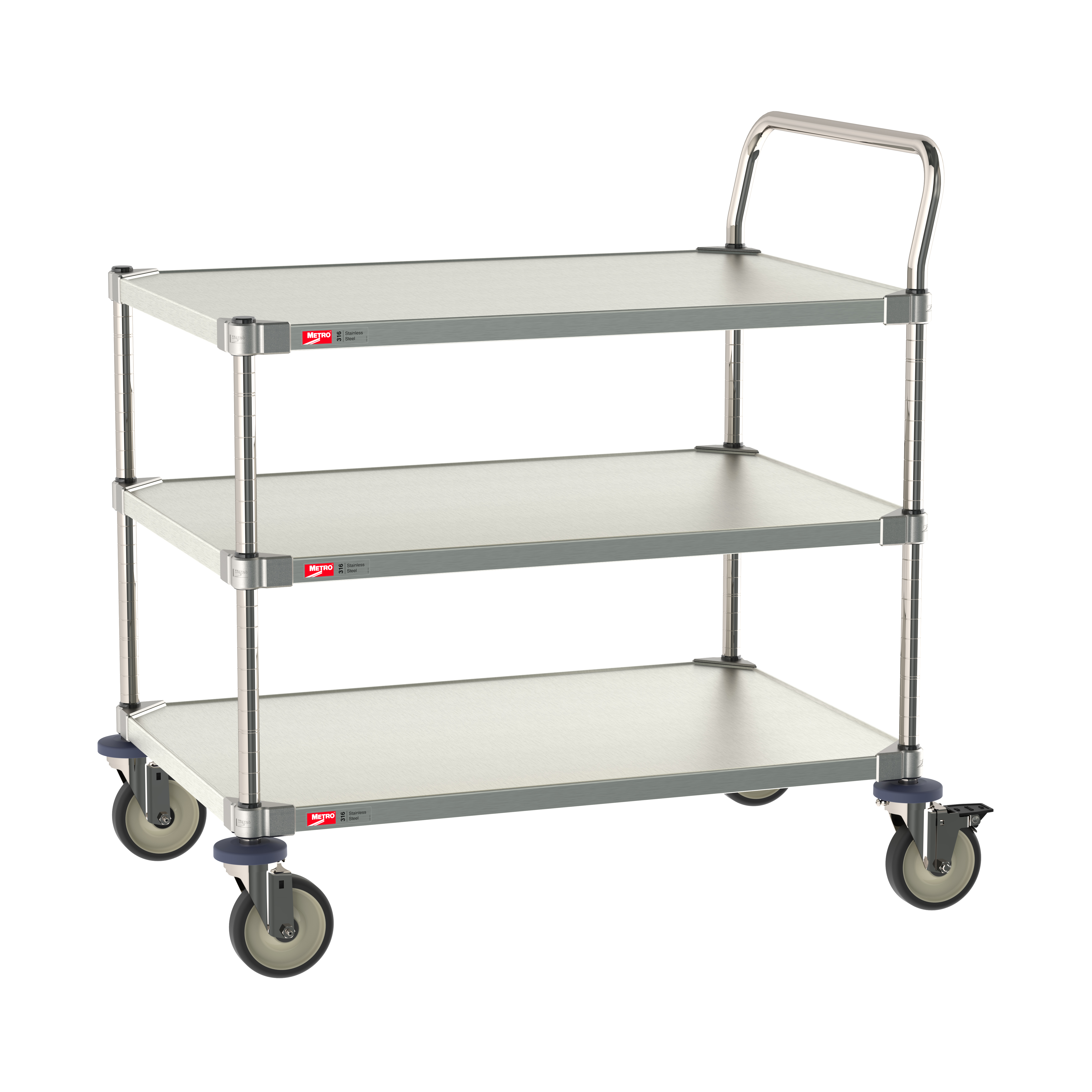
Metro has three types of general-purpose stainless steel lab carts with solid shelves to meet durability requirements:
- Super Erecta Stainless Steel Solid Shelf Lab Utility Carts have type 304 stainless steel shelves and total-guard casters, making them suitable for more general lab applications.
- Metro Type 304 Stainless Steel Carts are all-stainless steel (type 304) and feature cart-washable polyurethane casters for disinfecting and decontamination.
- Metro Type 316 Stainless Steel Carts provide a higher level of chloride and harsh chemical resistance with all-stainless shelves (type 316), posts (type 304), and cart-washable polyurethane casters.
For a wire cart option, the Metro SP Series utility cart is available with stainless steel shelves.
Stainless Steel Laboratory Solutions from Metro
Selecting the right stainless steel laboratory furniture comes down to how the space is used, how it is cleaned, and what it is exposed to over time. While 304 and 316 stainless steel are both widely used across laboratory environments, the right choice depends on the specific demands of the application.
At Metro, we work closely with customers to evaluate these factors and identify solutions that align with their environments, workflows, and sanitation requirements. Whether you are building a new facility or updating a lab, our team can help you determine the right stainless steel tables, shelving, and carts for your application.
Frequently Asked Questions About Stainless Steel for Laboratories
Still have questions about 316 vs 304 vs 430 stainless steel? Here are some of the most asked questions about stainless steel for laboratory use.
What type of stainless steel is best for lab furniture?
In most laboratory environments, 300-grade stainless steel is best because high levels of nickel and chromium increase its corrosion resistance. More specifically, type 304 stainless steel is the most common alloy used in labs because it offers a strong balance of durability, corrosion resistance, and cost. In labs where surfaces are exposed to aggressive chemicals and caustic chemicals, particularly at high temperatures, 316 is even more robust to chemical exposure.
What is the difference between 304 and 316 stainless steel in labs?
304 and 316 stainless steel are both well-suited for laboratory use due to their high durability and corrosion resistance. The main difference is that 316 contains molybdenum, which helps it better resist chlorides and harsh chemicals. Because of this, 316 is often chosen for cleanrooms, pharmaceutical environments, and labs that frequently use disinfectants like bleach or peracetic acid.
Can 430 stainless steel be used in labs?
430 stainless steel should not be used in laboratory applications. While its chromium content provides low-level protection against rust and corrosion, it lacks the necessary resistance to harsh cleaning agents and acids common in lab environments. 304 and 316 stainless steel have higher levels of chromium, and both contain nickel, which provides much better resistance to rust and pitting from common lab chemicals, salts, and disinfectants.
Why is stainless steel commonly used in labs?
Stainless steel is commonly used in laboratory furniture and equipment because it provides a durable, non-porous, and easy-to-clean surface that supports contamination control. It also performs well under repeated cleaning and exposure to moisture and chemicals, making it suitable for a wide range of laboratory applications.