
Walk-in coolers and freezers are some of the most important storage areas in a commercial kitchen. They’re also among the most demanding. Cold temperatures, moisture, and heavy loads can quickly take a toll on shelving, especially if it’s not designed for such harsh environments.
So, what is the best shelving for a walk-in cooler or freezer?
Heavy-duty commercial plastic shelving is considered one of the best storage solutions for your walk-in because it won’t rust or corrode when exposed to frequent moisture. However, certain types of wire shelving, such as multi-layer epoxy coatings and stainless steel, are also suitable for these conditions. The right choice for your walk-in will depend on your space, storage needs, budget, and application requirements.
Before choosing shelving for your walk-in, it helps to understand what differentiates cooler-and freezer-safe shelves from standard dry storage options.
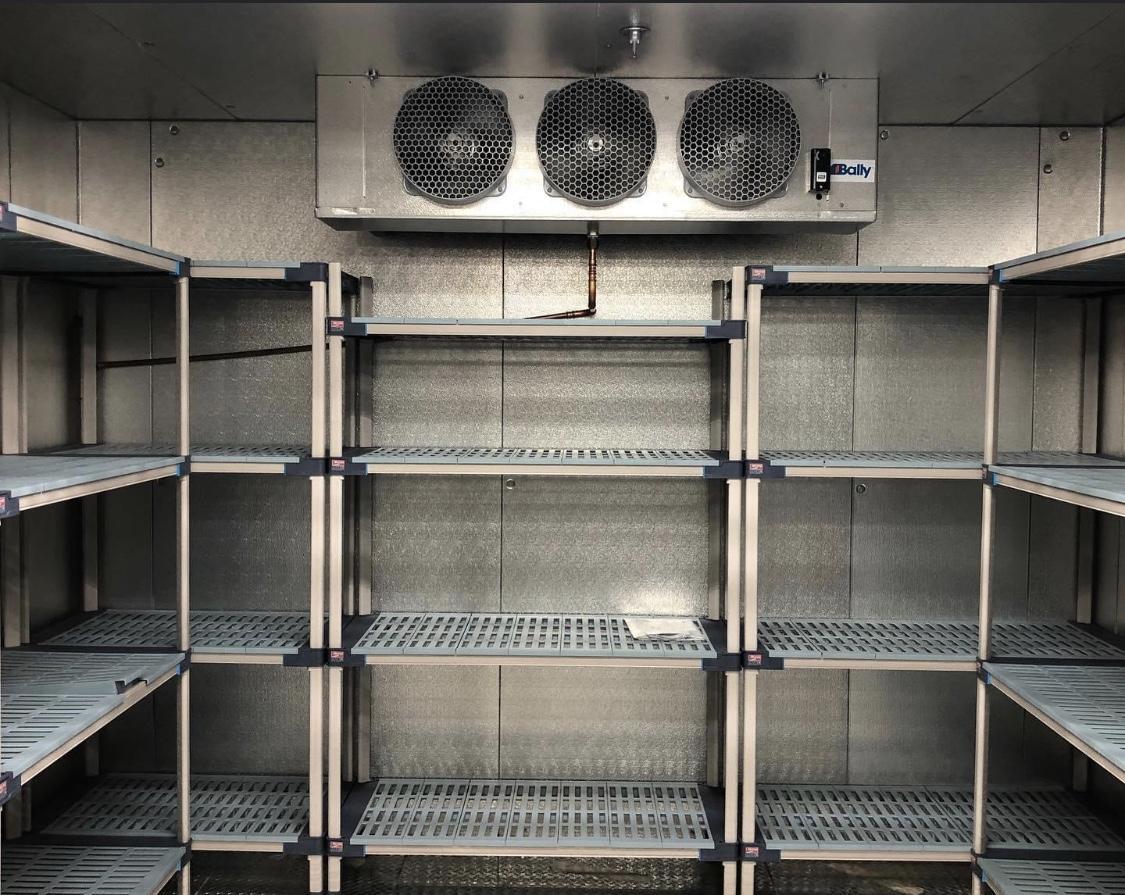
What Should You Look for in Walk-In Cooler Shelving?
Walk-in shelving needs to withstand cold, damp conditions without rusting, breaking down, or becoming difficult to keep clean. Not every rack is up to that task.
Here are some of the most important factors to consider when choosing shelving for your walk-in:
NSF Certification
First and foremost, all shelving in your walk-in (and commercial kitchen in general) should be NSF-certified. Almost all local health departments require it for food storage areas because it helps ensure that the materials are safe.
Not all NSF shelving is approved for the same environments, however. Shelving listed for dry environments is intended for areas with little or no moisture exposure. Walk-in coolers and freezers require NSF-certified shelving for all environments, meaning it has met additional requirements for use in wet or humid conditions.
This distinction is especially important when comparing wire shelving finishes. Chrome shelving may carry an NSF certification, but it is only approved for dry environments. Certain epoxy-coated wire, stainless steel, and plastic shelving options are available with NSF certification for all environments.
You can learn more about the different certification levels in our Guide to NSF Shelving.
Rust and Corrosion Resistance
Moisture and humidity are two big considerations when choosing shelving for cold storage. Walk-in coolers are especially subject to relatively high humidity. Materials and finishes that work well in a dry storage room may not withstand the harsher conditions inside a walk-in.
Chrome wire shelving, for example, is one of the most popular types of commercial shelving. However, as mentioned above, it is designed (and NSF-certified) for use in dry environments and can rust when regularly exposed to moisture. Plastic shelving cannot rust (it’s non-metal), while stainless steel and certain epoxy-coated wire finishes provide greater corrosion resistance than chrome.
Rust is never a good thing in a commercial kitchen. It’s a serious health, safety, and regulatory risk, so selecting shelving that won’t rust in these conditions is important.
Durability
In addition to withstanding rust and corrosion, it’s important to choose a commercial shelving unit that is designed for long-term strength and stability.
Walk-in shelving often needs to support cases of ingredients, bulk food, containers, and other heavy items. Check the load rating for both the individual shelves and the complete shelving unit before making a selection.
Metro shelving carries a Never Collapse Money-Back Guarantee on all shelving types, including heavy-duty MetroMax plastic shelving and Super Erecta wire shelving.
Cleanability
Cleaning and sanitation are important in commercial kitchens, including walk-in shelving. Spills, leaks, and condensation are common, and having easy-to-clean shelving helps eliminate mold, bacteria, and cross-contamination.
Look for shelving with surfaces and materials that can be cleaned easily and withstand the cleaning products used in your facility. Removable shelf mats (Like MetroMax and Super Erecta Pro shelving) can make routine cleaning easier by allowing individual sections to be removed, washed, and replaced.
Although not as easy to clean as removable shelf mats, open wire can help improve airflow around stored products and prevent liquid and crumbs from collecting on the shelf surface.
What Type of Shelving Is Best for a Walk-In Cooler or Freezer?
Plastic, epoxy-coated wire, and stainless steel shelving can all be used in walk-in coolers and freezers. While each material has different advantages, the most important factor is choosing shelving designed for cold, humid environments.
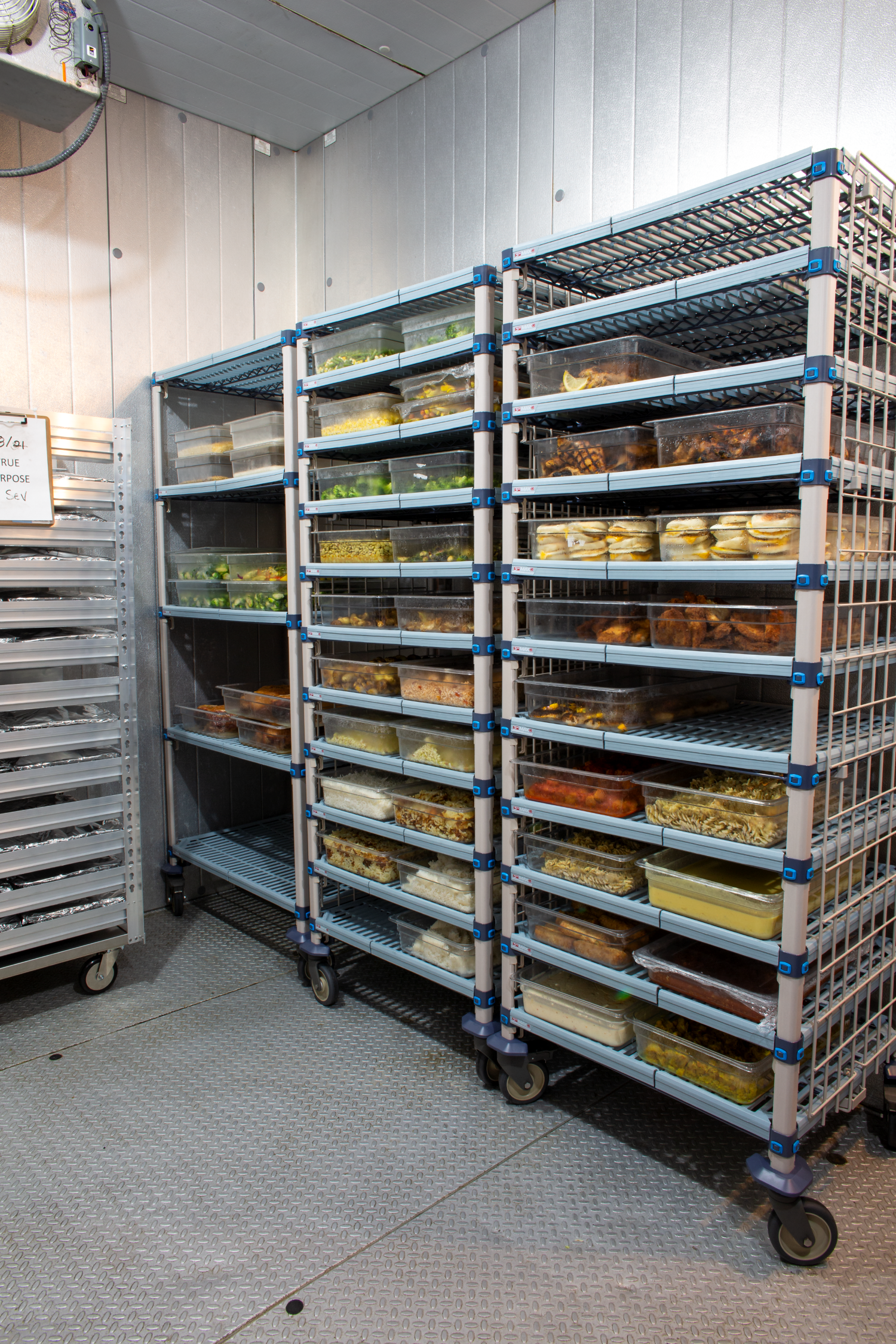
Plastic Shelving
Heavy-duty commercial plastic shelving is among the best storage options for walk-in coolers and freezers. Unlike metal, plastic won’t rust, making it ideal for areas where shelving is regularly exposed to moisture, condensation, and spills.
Plastic shelving also promotes cleanliness. Many commercial systems feature removable shelf mats that can be removed for cleaning, and MetroMax shelves have built-in Microban antimicrobial product protection to help keep surfaces cleaner in between regular cleanings.
Other benefits of plastic shelving:
- Corrosion resistance: Plastic won't rust or corrode in wet or humid conditions.
- Easy cleaning: Removable shelf mats can be washed separately and run through a commercial dishwasher.
- Air circulation: Vented shelf mats allow air to move around stored food and containers.
- Spill containment: Solid shelf mat options prevent spills from reaching lower levels.
For more information on heavy-duty plastic shelving, check out our Commercial Plastic Shelving Guide.
Wire Shelving
Wire shelving also offers excellent airflow, which is especially useful in refrigerated storage. Its open design allows cold air to circulate stored products rather than being blocked by a solid shelf surface.
However, choosing the right finish is important.
We recommend epoxy-coated wire or stainless steel as the most durable wire finishes. Hybrid wire/plastic shelving systems provide the best of both worlds by combining an epoxy-coated wire frame with removable plastic shelf mats for durability and easy cleaning.
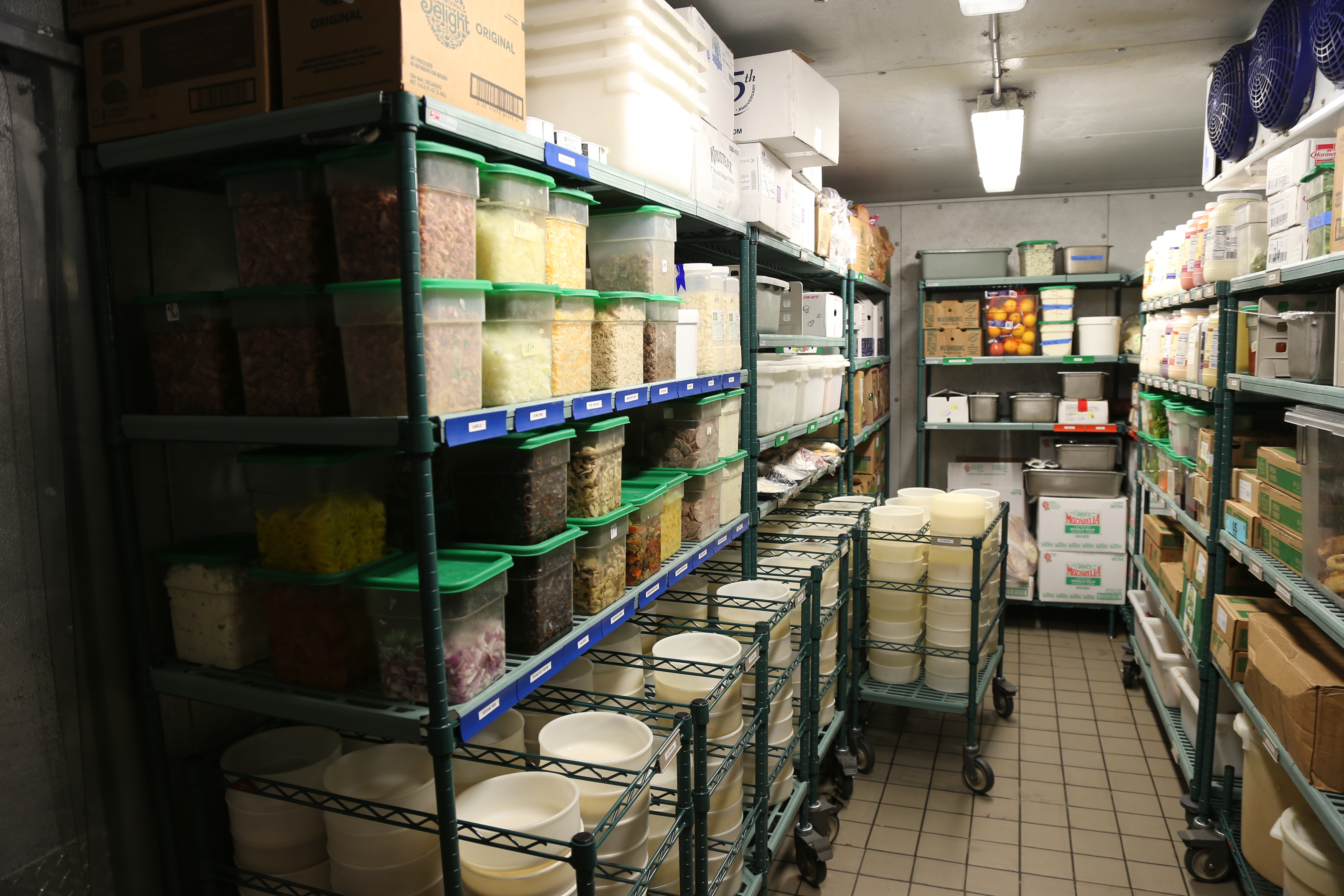
Epoxy-Coated Wire Shelving
Epoxy-coated wire shelving provides a protective barrier that helps the underlying metal resist corrosion. This makes it better suited to humid and wet environments than standard chrome wire shelving.
Epoxy-coated wire shelving is a more budget-friendly option compared to some other walk-in storage solutions.
Stainless Steel Shelving
Stainless steel wire shelving provides strong resistance to rust and corrosion (especially type 304 stainless steel). It is also extremely strong and durable.
Stainless steel can be particularly useful in demanding foodservice environments where shelving is exposed to frequent cleaning, moisture, and heavy use. However, it is generally more expensive than plastic or epoxy-coated wire shelving. For many walk-in applications, another corrosion-resistant material may provide adequate performance at a lower price point.
For more information on wire shelving, check out our Industrial Wire Shelving Guide.
Find the Right Walk-In Shelving with Metro
Just as every commercial kitchen is unique, there isn’t one shelving system that’s right for every walk-in cooler or freezer. Space constraints, inventory, workflow, environment, and even budget can all affect the answer to what is the best walk-in shelving for your facility.
At Metro, we carry a range of shelving options to meet your individual commercial cold storage needs. With different sizes, finishes, and configurations, you can build a system that makes the most of your walk-in while standing up to the demands of daily use.
Explore our full range of walk-in cooler and freezer shelving solutions or contact us today to help find the right shelving for your space.
Frequently Asked Questions About Walk-In Cooler and Freezer Shelving
Can you use chrome wire shelving in a walk-in cooler?
While it has many applications, chrome shelving is generally not recommended for walk-in coolers and freezers.
While chrome wire shelving is a durable and economical option for dry storage, its finish is not designed for prolonged exposure to moisture and humidity. Over time, these conditions can cause the shelving to rust or corrode, which can result in health code violations and fines.
Can all NSF shelving be used in walk-ins?
No, not all NSF shelving can be used in a walk-in cooler or freezer. Shelving that’s NSF certified for dry environments is not approved for wet or humid areas like walk-in coolers or dishwashing stations because it hasn’t passed corrosion resistance testing. This means it may degrade over time when exposed to moisture. For walk-ins or other high-moisture environments, ensure that your shelving is NSF certified for all environments. This ensures the shelving material will maintain its integrity over time.
How much weight can cooler shelving hold?
The weight capacity of walk-in cooler shelving depends entirely on the shelving material, type, size, and configuration. Commercial wire shelving is designed to have a higher weight capacity than residential storage (often 800 lbs. or more per shelf and 2,000 lbs. per unit), but it’s important to check the manufacturer’s load rating before use. Keep in mind that stationary shelving often has a higher load rating than mobile shelving.
How high should the bottom shelf be in a walk-in cooler?
In most cases, food stored in a walk-in should be at least six inches off the floor to comply with health codes. This minimum height helps protect food from spills, dirt, and other contaminants while leaving enough space for easy cleaning. Dunnage racks allow kitchens to stack oversized boxes off the floor if they won’t fit on a standard shelving unit.